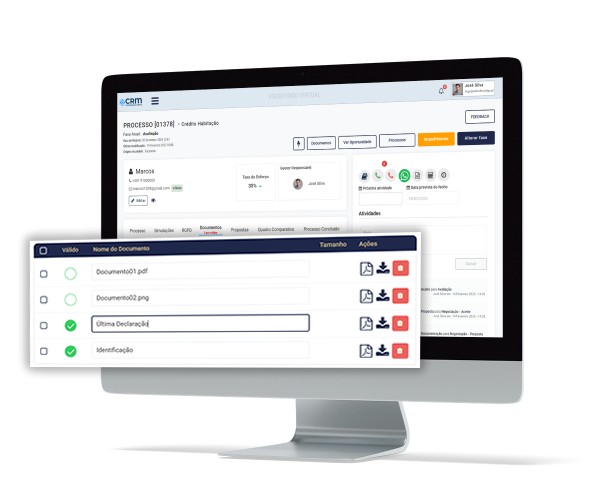
A credit intermediation CRM is used to organise clients, opportunities, tasks, proposals and process stages. But in practice, one stage often remains outside that organisation: document collection. The client is in the CRM, the process is in the CRM, the proposal may be in the CRM, but the documents are still scattered across emails, messages and shared folders.
That is why document collection should be seen as a natural extension of the CRM. Not because it must necessarily be technically integrated from day one, but because it belongs to the same operational logic: following the client, reducing failures, keeping history and giving the process more predictability.
The invisible stage that determines deadlines
Anyone working with credit knows that many delays do not start with bank analysis. They start earlier, while the file is still being prepared. An income tax statement is missing, the credit responsibilities report is outdated, the certificate sent is not the right one, or the client did not understand exactly which document was needed.
Each small mistake creates another message. Each new message slows the process down. And every lost day can matter, especially in mortgage credit, where the client may be negotiating a property, a deed, a valuation or an offer with a deadline.
The CRM helps maintain the overall view. But document collection needs its own discipline, because it is an operational stage with many small actions.
Operational integration before technical integration
When people talk about connecting a document tool to a CRM, it is easy to think immediately of technical integration: API, automatic synchronisation, shared fields and centralised history. All of that may make sense, but it is not the first mandatory step.
Before technical integration, there is operational integration. In other words, a document tool can be used independently and still be part of the same CRM-based working method.
A simple example: the CRM shows that the process has entered the document collection stage. The team uses a tool such as PedirDocumentos.pt to request official documents from the client. Then the process status continues to be managed in the CRM. There is no promise of direct integration here, but there is a clear logic of complementarity.
This point matters: a tool does not need to be described as integrated with the CRM in order to create value inside a team’s workflow.
What should stay in the CRM
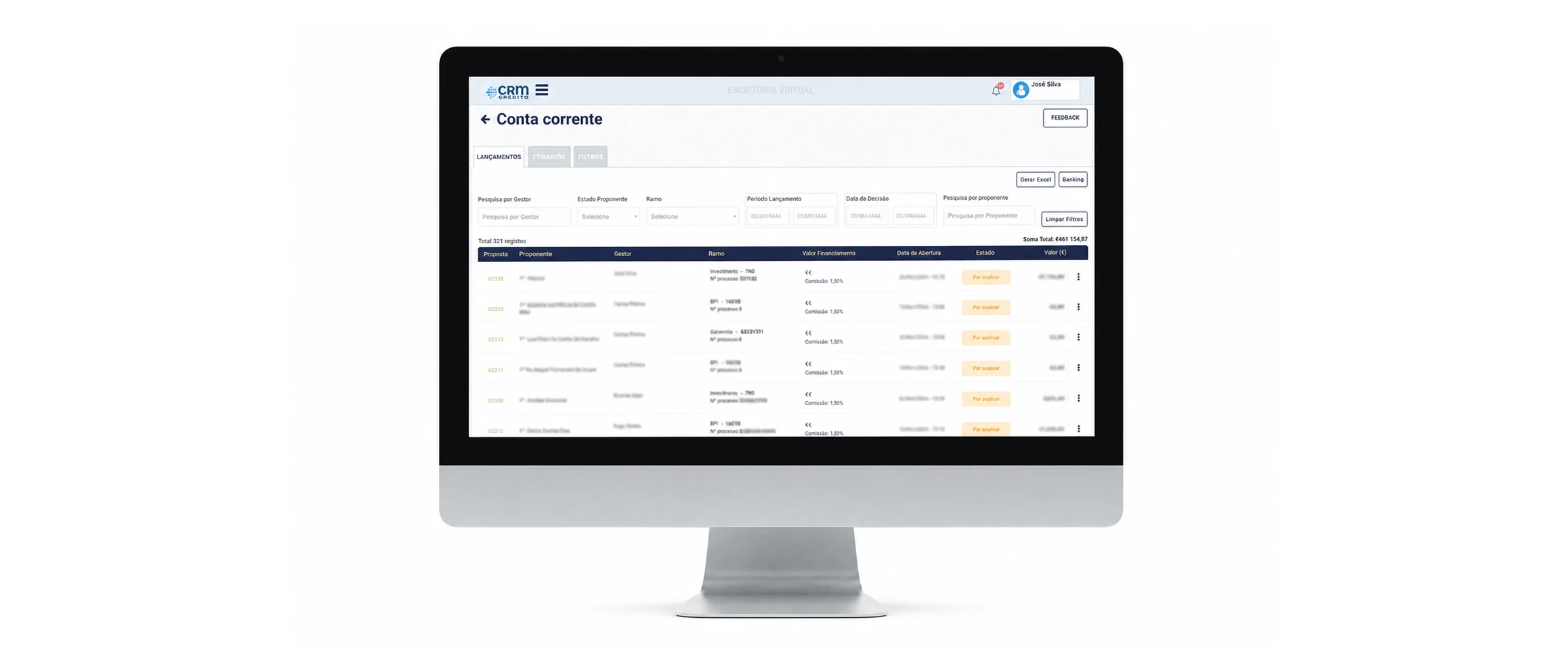
The CRM should remain the centre of operations. It should hold client data, lead source, process stage, contacts, tasks, bank proposals, internal notes and follow-up history.
It should also be where the team can quickly understand:
- What stage each process is in
- Who is responsible for the next action
- Which documents have already been received
- Which documents are still blocking submission
- Which bank or partner is analysing the file
This centralised view is essential for managing volume, priorities and service quality.
What can live in a complementary tool
Not everything needs to start inside the CRM. Some tasks are specific enough to benefit from their own tool, especially when they require a simple experience for the end client.
Document requesting is a good example. The client does not need to see the full CRM. The client needs a clear, secure and guided experience to provide or obtain the right documents. For the team, the priority is reducing errors and accelerating collection.
In a first stage, an autonomous tool can solve this problem very well. Technical integration can come later, when there is enough maturity, volume and a clear need to automate status updates, files or alerts.
How to prepare for a future integration
Even when the integration does not exist yet, teams can prepare for it. The first step is to standardise processes:
- Define checklists by type of credit
- Use consistent document names
- Record in the CRM when collection has started
- Update the status when documentation is complete
- Separate received, pending and invalid documents
The more consistent the working method is, the easier it becomes to integrate tools in the future. Technology works better when the operation already knows what it wants to measure, automate and control.
Why this improves the client experience
For the client, the difference is clarity. Instead of receiving a loose list of documents and trying to understand where to obtain each one, the client gets a more guided path. Fewer doubts mean fewer calls, fewer messages and less frustration.
For the intermediary, the difference is control. The team knows what was requested, what is missing and what the next step is. The process depends less on each consultant’s memory and more on a working system.
That is where CRM and document collection meet: both exist to reduce uncertainty.
Conclusion
Document collection should be closer to the CRM, even when there is not yet a direct technical integration. What matters is treating this stage as part of the same client follow-up flow.
Tools such as PedirDocumentos.pt show that path: they can be used independently, but they were designed to complement the organisation a CRM brings to the process. They do not replace commercial management or the overall view of the file. They help solve a critical stage where small delays can have a major impact.
For credit intermediaries, the message is simple: the CRM organises the process; organised document collection accelerates it.
Read also
- PedirDocumentos.pt: a platform that simplifies document collection — an introduction to the tool and its role in the process.
- Credit Intermediation CRM: The Best Solution to Manage and Increase Approvals — the basis for centralising clients, processes and tasks.
- AI and Credit CRM: The New Digital Revolution in Credit Intermediation — how automation and CRM are transforming operations.
Ready to get started?
See CRM Crédito in action
Schedule a free demo and discover how the CRM can transform your business.